

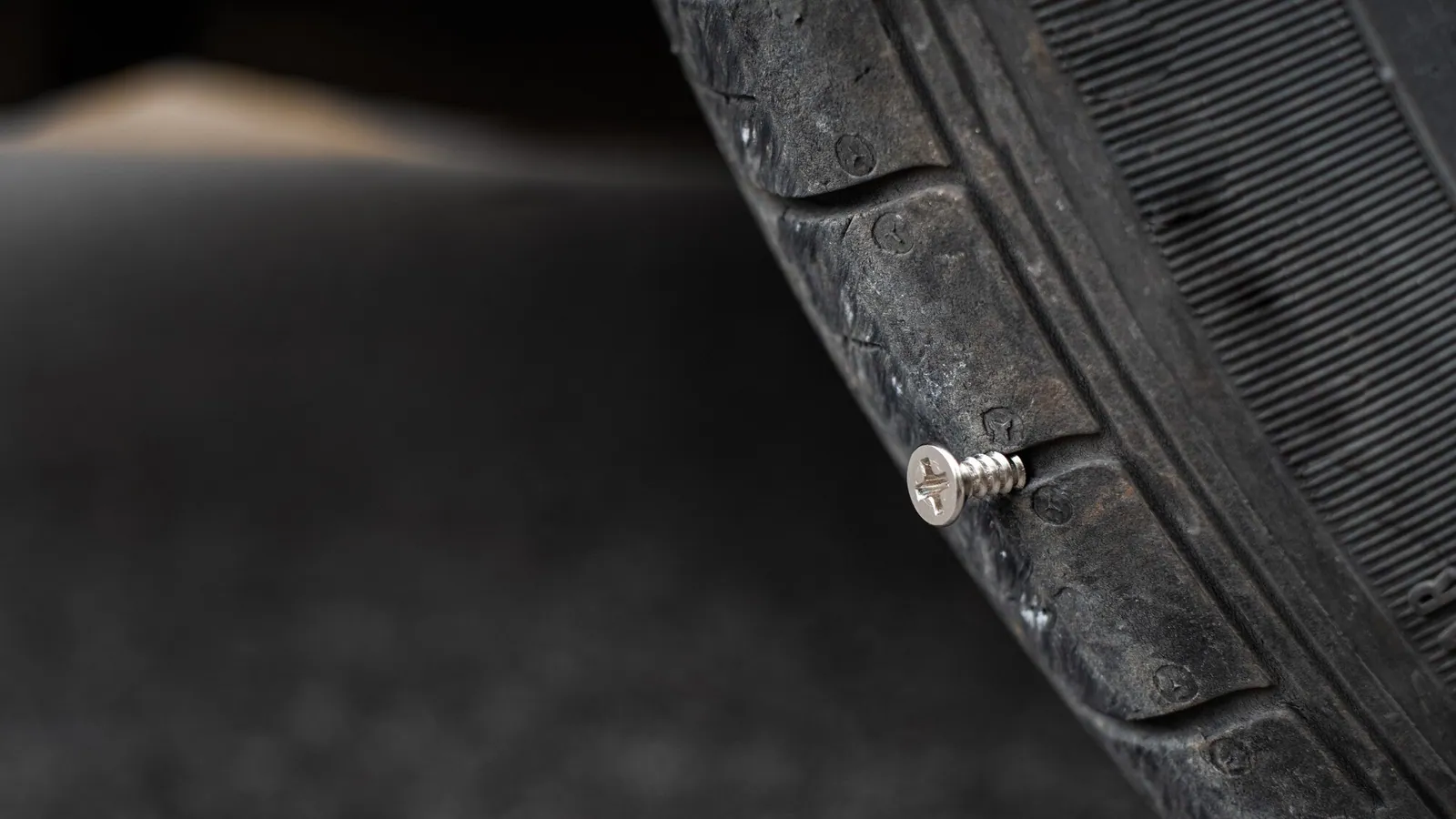
Sometimes, yes. You can patch a nail hole in a run flat tire if the puncture is small, sits in the tread, and the tire wasn't damaged by driving on it while flat. If the nail is in the sidewall or shoulder, or the tire was driven low on air for too long, it needs to be replaced.
The answer isn't the same for every tire. Below we cover what decides it, how a run flat tire with a nail puncture is properly fixed, and why a quick plug or can of sealant isn't the same thing. We also cover what to do if you're stuck with a flat right now.
When can a run flat tire be patched?
A repair is only an option when all of these are true:
- The puncture is in the tread area. The flat center of the tire is the part built to be repaired. The shoulder and sidewall flex constantly, and a repair there won't hold safely.
- The hole is small. Repair standards set a size limit for the puncture. That limit comes from the tire manufacturer and industry repair guidelines, so we check it against your specific tire.
- The tire wasn't driven flat for long. Run flat tires have stiff, reinforced sidewalls so you can keep driving after losing air, but only for a limited distance and speed. Your owner's manual lists those limits for your vehicle.
- The inside of the tire looks clean. The tire has to come off the wheel so the inner liner and sidewalls can be inspected.
- The tire maker allows it. Some manufacturers discourage or prohibit run flat repairs. Others allow them under set conditions. Check your tire brand's guidance, and ask us if you're unsure.
If even one of these fails, the safe answer is a new tire. For general tire safety guidance, the tire safety information from the National Highway Traffic Safety Administration (NHTSA) is a good reference, and your owner's manual covers the details for your own vehicle.
Why does driving on a flat matter so much?
This is the question we hear most from run flat owners: "I drove a few miles on it, is it still fixable?"
The reinforced sidewall on a run flat is what carries the car after air loss. When it carries the weight with little or no air, it heats up and flexes far more than normal. That can break down the inner structure of the sidewall even if the outside looks fine.
You often can't see this kind of damage with the tire on the car. That's why the tire has to be dismounted and checked from the inside. A tire that looks perfect from the outside can still be unsafe to patch.
If your tire pressure warning light came on and you kept driving, tell us how far and how fast. It helps us make the call honestly.
How do you fix a run flat tire with a nail puncture?
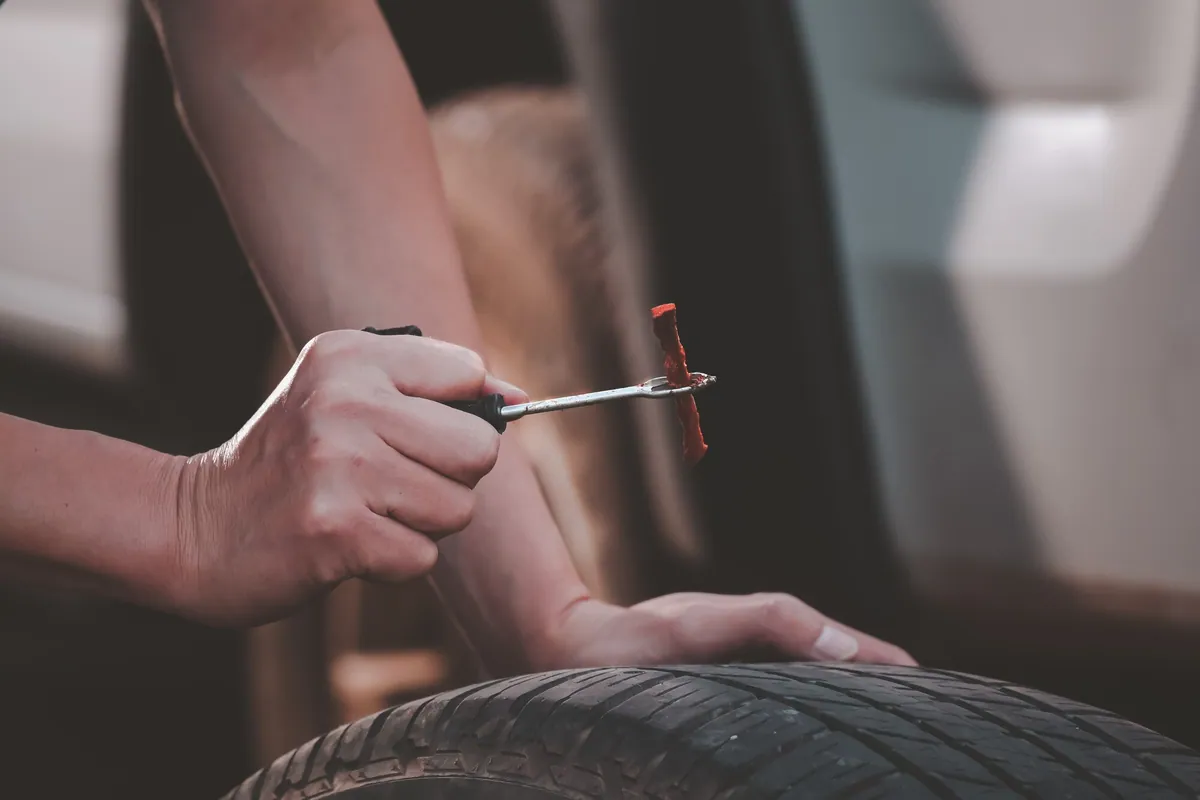
A proper repair is done from the inside of the tire. It isn't a quick fix from the outside while the tire is still on the car. Industry groups such as the Tire Industry Association publish training and repair guidance built around this inside-and-out approach.
Here's how the process goes:
- Remove the wheel and dismount the tire. This lets us see the full inner liner.
- Inspect inside and out. We look for sidewall creasing, heat damage, dark rubbing marks inside, and any other punctures.
- Remove the nail and prepare the hole. The injury channel is cleaned and prepared so the repair material bonds properly.
- Fill the hole and seal the inner liner. A proper repair seals both the hole through the tire and the inner liner.
- Remount, balance and set the pressure. The tire is balanced again and inflated to the pressure on your door jamb placard.
If the inspection turns up damage, or the nail is outside the repairable area, we'll tell you plainly and offer a replacement instead. A plug pushed in from the outside with no inspection doesn't meet this standard. It can look like a fix, but it doesn't let anyone check for hidden damage.
What about plug kits and tire sealant?
Plug kits and sealants are popular because they're low cost and quick. For emergencies they can get you off the shoulder. For a run flat tire, we'd treat them as temporary at best.
- Plug kits don't let you inspect the inside of the tire. On a run flat, that missing inspection is the main risk.
- Sealant should be used the way the product label says. It can coat the inside of the tire, which can make a later inspection harder.
- Neither one tells you if the sidewall is damaged.
If you used a plug or sealant to get home, mention it when you call. We'll take a look and tell you whether the tire is still a good candidate for a proper repair.
How long does a repair last, and what if I need a new tire?
When a repair is done correctly on a tire that qualifies, it's generally intended to last for the remaining life of the tread. That's general industry guidance, not a promise about any one tire. A repair done the wrong way, or on a tire that should have been replaced, can fail much sooner.
If the tire can't be repaired, expect replacement to cost more than a standard tire of a similar size, because of the reinforced construction. We don't list prices in this article because they depend on the size, brand and vehicle. Call us with your tire size for a quote, or shop tires online and schedule mobile installation.
If the replacement cost is a concern, financing is available through Snap Finance with no credit needed, subject to approval. There's also a 100-day cash payoff option.
What do we do differently? We come to you
The usual advice is to get the car to a shop. With a flat run flat tire, that can mean a long, awkward trip. We skip that part. We come to your home, office or roadside, so there's no waiting room and no need to move the car.
Here's how it goes:
- You call and tell us your tire size, what happened, and roughly how far you drove after the flat.
- We typically arrive within 30 to 60 minutes. That's a typical range, not a guaranteed arrival time.
- We inspect the tire where you are. If it qualifies, we repair it. If it doesn't, we can replace it with a new tire, with mounting and balancing done on-site.
SOS Mobile Tire has been in business since 2014 and is rated 4.8/5 from 237 Google reviews, as shown on our website in October 2026. Hablamos español, and our team is bilingual.
We work on more than passenger cars, too. One company handles everything from compact cars to tractor trailers and farm equipment. Tell us your run flat size when you call and we'll confirm what we can do on-site.
Our coverage includes highway breakdowns. If you're stuck, see our page on flat tire help on Alligator Alley and I-75. Local drivers can also read about flat tire service in Sunrise, FL.
What should you do right now if you have a nail in a run flat?
- Check your pressure. If the pressure warning light is on, slow down and avoid long drives.
- Leave the nail in if you can. It may be partly sealing the hole, and it shows us where the puncture is.
- Note how far and how fast you drove. This helps us judge whether the sidewall may be damaged.
- Don't rely on a plug or sealant for ongoing use. Use them only to reach safety.
- Call us. We'll check the tire where you are and tell you plainly whether it can be fixed.
If you have a nail in a run flat tire, see our mobile flat tire repair service and we'll check it where you are.